For ten agonizing years, they lived in the
shadow of a tragedy that refused to fade, treating their birthdays like
funerals and their home like a tomb. They were told to move on, to
forget, and to embrace their new reality as the “surviving two,” but a
dark, festering secret was waiting in the attic. On the morning of their
twenty-first birthday, a mysterious, weathered wooden box appeared on
the breakfast table, carrying a final, chilling message from their
long-dead sister. When they pried open the lid, they didn’t just find
dusty mementos—they unearthed a truth so shattering it permanently
destroyed their past.
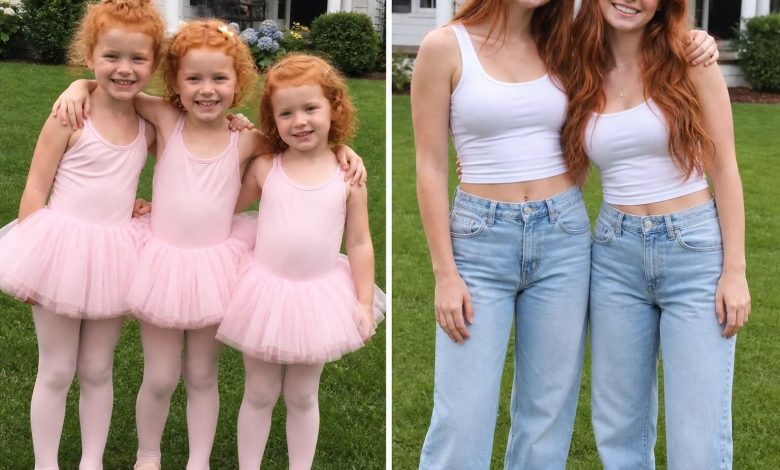
There were three of us once: me, Leila,
and Nora. I realize that sounds like the opening line of a cautionary
tale, but I have never possessed the vocabulary to make peace with how
it ended. After Nora died, the world—and our own mother—found it
infinitely easier to label Leila and me as “twins.” It was a convenient
fiction, a necessary narrative to avoid the brutal, suffocating reality
of being the “surviving two.” But Leila and I never felt like twins; we
felt like two jagged, broken shards of a whole that had been irrevocably
smashed. We were left to navigate a shared life that felt like a
permanent, haunting absence.
Nora was our compass, our protector, and
our sun. She was seven minutes older than us, a seniority she wore like a
sacred crown. She was the mediator of our petty childhood wars, the one
who stepped between us when we fought over window seats, and the
self-appointed guardian of our peace. She was sunshine in human form,
the girl who tied our shoelaces, saved her favorite candies for us, and
insisted on sleeping in the middle during storms because she believed
leaders were meant to protect both sides. We looked at her and saw the
architecture of our future, but that future was stolen by a sickness
that defied every plea and every tear.
I remember the sterile, suffocating air of
the hospital room and the cartoon stickers on the wall that felt like a
grotesque, cruel joke. While Leila dissolved into uncontrollable sobs, I
stood frozen, gripping the cold metal rail of Nora’s bed, foolishly
believing that if I held on hard enough, I could anchor her to this
world. I couldn’t. After she passed, the house fell into a deafening,
unnatural quiet. Her slippers remained in the hallway as a shrine to a
life interrupted; her toothbrush sat beside ours like a silent, accusing
ghost. Birthdays became strange, hollow rituals where we blew out
candles for two, though our hearts silently accounted for three.
By the time we hit our teenage years, the
grief hadn’t united us; it had acted like a wedge. Leila became
sharp-edged and distant, eager to flee the scene of our shared history,
while I retreated into a suffocating, self-imposed silence. We
desperately needed each other, but the sight of one another was a
constant, searing reminder of the space where Nora should have been. On
the morning of our twenty-first birthday, I felt as though I were
stepping into a room with the lights permanently extinguished. We
gathered in the dining room, our mother’s face etched with a decade of
unspoken sorrow. The room was decorated, but the festive balloons felt
like an intrusion upon our mourning.
Then, our mother walked in carrying a
small, worn wooden box held against her chest. Her eyes were bright with
unshed, jagged tears. “She made this before she died,” she whispered,
her voice trembling with the weight of a decade of held-back emotion.
“She told me it was for when you were grown up. I never opened it. Not
once.” A yellowed envelope sat atop the dark, scarred wood: OPEN ON OUR
21ST BIRTHDAY. My hands were shaking so violently I could barely grasp
the lid. Inside lay three bundles, each tied with a faded purple
ribbon—Nora’s signature crooked bows. My name was on one, Leila’s on
another, and both of ours on the third.
Inside my bundle was a friendship bracelet
and a letter that peeled back the layers of my carefully constructed
stoicism. Nora knew me better than I knew myself. She knew I hid when I
was hurt to appear easier to love. She told me to stop hiding, to let
the people who cared see my wounds. Leila’s bundle contained a pressed
candy wrapper and a note that dismantled her defenses. “You are not
mean,” Nora wrote. “You are scared.” It was a revelation that finally
bridged the canyon between us, the first authentic connection we had
shared in a decade. We sat there, weeping not for the past, but for the
years we had wasted drowning side by side without ever reaching out.
Finally, we opened the shared bundle. It
contained a folded paper crown and one final letter, along with an old
cassette tape. As Nora’s thin, small voice filled the room from our
father’s old stereo, time seemed to stop. “I am not mad that I have to
go,” she said, her voice crackling through the static of the tape. “I
got to be your sister. That was the best thing.” She told us she had
heard our secrets, heard us wishing to trade places, and she commanded
us to live. She wasn’t just a memory; she was a command to survive.
That day, we cut three slices of cake. One
for Leila, one for me, and one for Nora. The empty chair at the table
no longer felt like a jagged wound. Instead, it was a space saved for
love—a testament to a bond that death couldn’t dissolve. We finally
realized that grief doesn’t have to be a wall that separates us from the
living. Sometimes, if we are brave enough to reach across the silence,
it can be the very thing that brings us home to each other. We had spent
years hiding in our sorrow, but Nora’s final gift forced us to step
out, to finally take the hand that had been waiting for us all along.
The past had been a prison, but with this truth, we were finally,
devastatingly, beautifully free.


0 comments:
Post a Comment